
Influential Women Features Judith Mann: Senior Curator Of European Art To 1800 At The Saint Louis Art Museum
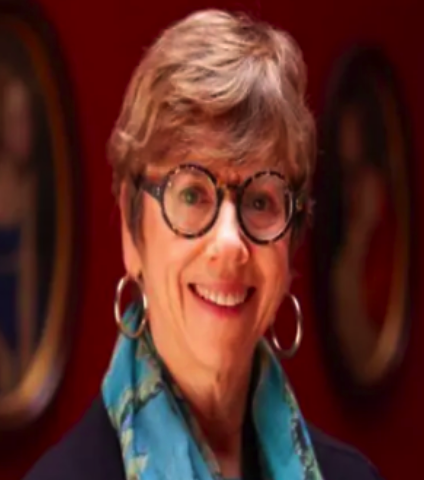
Judith Mann has devoted more than 37 years to the St. Louis Art Museum, where she serves as Curator of European Art to 1800. Her career reflects an uncommon combination of scholarly rigor, curatorial excellence, and long-term commitment to education and mentorship in the field of art history. Known for her expertise in sixteenth- and seventeenth-century Italian art, Judith has played a central role in shaping major exhibitions and advancing scholarship that continues to influence museum studies and Renaissance and Baroque art research.
Her path into art history was not initially planned. As an undergraduate, Judith began her studies in mathematics before taking a required art history course that changed the direction of her academic and professional life. Inspired by the subject, she shifted her focus and pursued art history, eventually building a career that would span decades in both academic and museum settings. After graduation, she gained experience through a range of roles, later returning to graduate school to complete her PhD while raising her two children. The process took more than a decade, reflecting both the demands of academic life and her commitment to balancing family responsibilities with professional ambition.
Early in her career, Judith taught at local universities and accepted temporary curatorial assignments, experiences that helped her develop practical expertise in both education and museum work. These opportunities ultimately led her to the St. Louis Art Museum, where she secured a permanent position and discovered a deep passion for curatorial practice. Over time, she built a career defined by both intellectual depth and public engagement.
Throughout her tenure at the museum, Judith has specialized in European art prior to 1800, with a particular focus on Italian artists of the Renaissance and Baroque periods. Her research has centered on influential figures such as Artemisia Gentileschi, Caravaggio, and Federico Barocci. She has curated numerous significant exhibitions, including a landmark project examining a seventeenth-century female painter and her father, which has become an important scholarly reference in the field.
Among her most notable achievements is the Federico Barocci exhibition, which traveled from St. Louis to the National Gallery in London. The exhibition received widespread recognition and earned the AAMC Award for Outstanding Museum Exhibition in 2012, underscoring its scholarly significance and international impact. Judith’s curatorial work has consistently combined academic research with public accessibility, allowing broader audiences to engage with complex art historical narratives.
In addition to her curatorial contributions, Judith has been deeply committed to education and mentorship. She established a summer internship program at the museum designed to provide hands-on experience for emerging art historians, helping to train the next generation of museum professionals. She has also taught courses in Medieval, Renaissance, and Baroque art at a local university, extending her impact beyond the museum and into academic settings.
Judith’s dedication to accessibility and public engagement is reflected in her advocacy for free admission and robust public programming at museums. She has long believed that cultural institutions should serve broad and diverse audiences, offering meaningful educational opportunities regardless of background or economic status.
Judith attributes her success to persistence and a willingness to continue forward despite setbacks. Early in her career, her first major project faced repeated delays and uncertainty, yet she remained committed and adaptable, finding alternative ways to move the work forward. She also made a conscious effort to build professional relationships, often reaching out to scholars and curators, asking questions, and engaging with the broader museum community at a time when formal mentorship was limited.
A pivotal moment in Judith’s career came in 1995 when she reached out to a highly regarded figure in her field at the Metropolitan Museum of Art. Despite having no established reputation at the time, Judith initiated the connection, which evolved into a professional relationship and mentorship that lasted five years. That experience opened important doors and helped shape her early scholarly development. She also acknowledges the importance of personal support, including the encouragement of her husband during periods of professional uncertainty, as an important factor in sustaining her early career path.
The best career advice Judith received came after completing her PhD, during a period when she struggled to secure a permanent academic position. A career counselor encouraged her to think beyond traditional career structures and consider building a professional path that combined multiple roles rather than relying on a single institutional appointment. While she ultimately did not pursue that exact model, the advice influenced her long-term perspective on flexibility and adaptability in professional life.
Judith also learned the importance of initiative and self-direction. Rather than waiting for opportunities to emerge, she emphasized the value of actively introducing oneself to others, seeking conversations, and building a broad professional network. In her experience, most colleagues are receptive to engagement and willing to offer guidance when approached thoughtfully. Over time, she found that cultivating a wide network of relationships proved more valuable than relying on a limited circle of contacts.
Judith advises young women entering the field of art history and museums to seek mentors early and remain proactive in their professional development. She encourages emerging professionals to take responsibility for building relationships, asking questions, and engaging directly with established figures in the field. She also stresses the importance of flexibility in career planning, noting that many successful careers do not follow a single linear trajectory.
Judith acknowledges that early-career setbacks are common and should be viewed as part of the professional learning process. In her view, many young professionals enter the field with a history of academic success, but museum and academic careers require resilience in the face of uncertainty and delayed progress. Persistence, she notes, is often what distinguishes long-term success from early departure.
One of the most pressing challenges facing the museum field today, according to Judith, is institutional instability. Many museums continue to recover from the financial and operational disruptions caused by the COVID-19 pandemic. Staffing reductions and hiring freezes have made it more difficult for professionals to enter or remain in the field. At the same time, rising costs associated with exhibition production, transportation, and international loans have forced institutions to reconsider the scale and scope of their programming.
Funding constraints have further limited research opportunities, particularly grants that once supported travel and international collaboration. These shifts have led many museums to adapt by focusing more on locally available collections and rethinking traditional exhibition models. Judith also notes that changes in institutional priorities at her own museum reflect broader trends affecting curatorial departments across the field.
Despite these challenges, Judith remains deeply committed to the mission of museums as spaces for public education and cultural engagement. She places greater value on impact and connection than on financial reward, emphasizing the importance of making art accessible to all audiences. She continues to support programs that serve families, students, and community members, reinforcing the museum’s role as a public resource.
Judith is also actively involved in civic and professional service, including participation in arts commissions, nonprofit boards, and scholarly organizations that support emerging professionals. She views mentorship and outreach as essential responsibilities, particularly given the limited guidance she experienced early in her own career.
As she approaches retirement, Judith Mann continues to focus on completing one final project, leaving behind a legacy defined by scholarship, mentorship, and sustained contributions to the field of art history and museum practice.
Learn More about Judith Mann:
Through her Influential Women profile, https://influentialwomen.com/connect/Judith-Mann
Influential Women
Influential Women provides a platform where women from all backgrounds can connect, share their perspectives, and create content that empowers themselves and others. Through storytelling, thought leadership, and creative expression, Influential Women amplifies voices that inspire change.
Editorial Team
Influential Women
email us here
Legal Disclaimer:
EIN Presswire provides this news content "as is" without warranty of any kind. We do not accept any responsibility or liability for the accuracy, content, images, videos, licenses, completeness, legality, or reliability of the information contained in this article. If you have any complaints or copyright issues related to this article, kindly contact the author above.
